Z0 Binary Structure
Extraction and clarification of the 2019 observation in The Fundamental Constants in binary: the significant digits of the characteristic impedance of vacuum form a 39-bit information object that already contains whole quark mass-signature words and visually arranges into a gluon-like diagram.
For the historical chain that makes this a pre-2019 metrological artifact rather than the modern moving CODATA value, see History of Z0 up to the 2019 SI Break.
Claim Being Preserved
The document is not claiming that the unit ohm is sacred. It is claiming that the published significant digits of a mature physical constant are an information object. When the pre-2019 characteristic impedance value is reduced to significant digits and encoded in binary, the resulting bit string appears to contain the quark mass signatures as intact words.
Primary Object
376730313461
39 bits
101011110110110111000000110001011110101
Prime And Triple Facts
The source document identifies 376730313461 as prime and notes
that it is the hypotenuse of a primitive Pythagorean triple. Local arithmetic
checks confirm the stated identity:
376730313461^2 = 233635311620^2 + 295533873261^2
gcd(233635311620, 295533873261, 376730313461) = 1
376730313461 mod 4 = 1
That matters because odd primes congruent to 1 mod 4 can appear
as the hypotenuse in a primitive Pythagorean triple. In this framing, the Z0
significant-digit integer is not just a 39-bit seed; it is a prime seed with
a geometric sum-of-squares identity.
Standard Chart
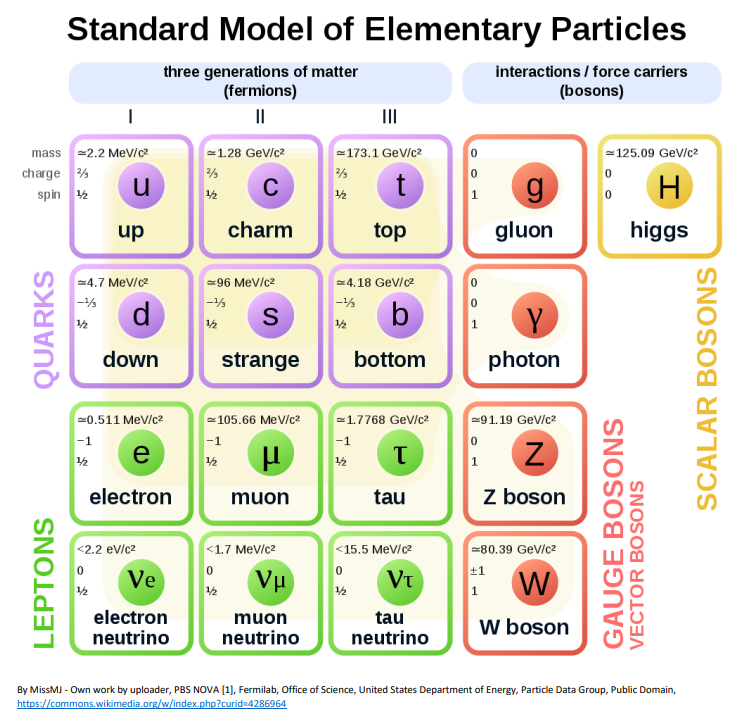
Observe carefully the significant digits of the quark mass values in the standard chart context available when the project made its initial observations using the pre-2019 CODATA value for the characteristic impedance of vacuum.
What Happened To CODATA After 2019?
The 2019 SI redefinition changed the status of several constants. The
defining constants h, e, k,
N_A, c, Delta nu_Cs, and
K_cd were assigned exact numerical values. As a result, the
vacuum electromagnetic constants no longer occupy exactly the same evidence
position they occupied in the pre-2019 CODATA tables.
For this project, the important example is the characteristic impedance of
vacuum, Z0. Before the 2019 SI revision, the published CODATA
value preserved a particular historical mixture of measurement, theory,
convention, uncertainty, and consensus. After the revision, Z0
is more directly tied to the measured fine-structure constant and to the
exact values assigned to h, e, and c.
That does not make the pre-2019 value more physically true. It makes it a different kind of information artifact.
Why should pre-2019 CODATA still matter? Because it captured a mature physics catalog before the redefinition compressed several relationships into exact defining constants. Some entries still carried visible traces of how theory, experiment, unit convention, uncertainty, and consensus were being stitched together. This project is asking whether that published symbolic layer contains structure that has not been inspected as an information substrate before.
The claim is therefore not:
pre-2019 units are sacred
The claim is:
pre-2019 CODATA is a historically specific receipt of theory and measurement,
and the Z0 receipt may preserve structure worth testing before later SI
normalization hides it.
Proto-Geometry Note
If a fundamental constant of physics is truly fundamental, then a structural or geometric trace inside its information form would not be absurd in advance. In this reading, Z0 is not only a numeric seed; it also looks like proto-geometry: a compact binary object with edge bits, interior word structure, a central gap, and orientation-dependent layouts.
Informally, the forward layout has a minimal tetrahedral flavor — a kind of
binary d4 in tabletop terms. That image should be treated as an
interpretive clue, not as proof. The research task is to turn the
visual/geometric hunch into explicit segmentation rules, generated layouts,
and controls.
Discovery Provenance: Visual Natural Order
The quark observation was not originally found by arbitrarily permuting the Z0 information until a match appeared. It came from looking at proto-geometric views of the impedance bits and noticing that quark words could be read in a natural visual order, including an outside/clockwise ordering in the relevant layout.
That discovery path matters. The project should preserve the difference between:
- changing or scrambling the information until a match appears, and
- reading the same fixed information through a natural orientation, boundary, or traversal order suggested by the layout itself.
The stronger claim to test is that all quark signatures may be resolvable from the fixed Z0 information when viewed in the right natural orientation/order, without changing the underlying bits. Future code should therefore reproduce candidate visual traversals explicitly: row order, outside boundary order, clockwise/counter-clockwise order, orientation used, and any closure rule used.
Quark Words
The source converts quark mass values to binary using significant digits and ignoring units and decimal placement for the initial information experiment.
| Quark | Digits | Native bits | Whole-word form used in Z0 reading |
|---|---|---|---|
| UP | 22 | 10110 | 101101, forward plus backward closure |
| DOWN | 47 | 101111 | 10111101, forward plus backward closure |
| STRANGE | 96 | 1100000 | 1100000011, forward plus backward closure |
| CHARM | 128 | 10000000 | not part of the first native Z0 segmentation |
| BOTTOM | 418 | 110100010 | not part of the first native Z0 segmentation |
| TOP | 1731 | 11011000011 | not part of the first native Z0 segmentation |
Whole-Word Segmentation
The key observation is that the Z0 bits can be split into intact chunks without scrambling or overlapping the first quark words:
101011110110110111000000110001011110101Read linearly, this accounts for all 39 bits:
10
10111101
101101
1100000011
000
10111101
01
The document frames this as syntactic rather than decorative: the quark
signatures are found sitting in the Z0 binary string as whole words, with
edge bits and a central 000 gap.
Orientation Coverage Note
The legacy system did not treat this forward reading as the only interesting structure. The Z0 evidence must preserve the four canonical orientation views used elsewhere in the project: forward, reverse, inverse, and inverse-reverse.
| orientation | bit string |
|---|---|
forward | 101011110110110111000000110001011110101 |
reverse | 101011110100011000000111011011011110101 |
inverse | 010100001001001000111111001110100001010 |
inverse-reverse | 010100001011100111111000100100100001010 |
The chart below is therefore one representative forward-orientation layout, not the complete legacy evidence set. The other three orientation structures should be restored as first-class evidence from the legacy source or reproduced by code, not silently ignored.
Manual Line Break Layout
The source then manually inserts line breaks and spaces around the forward Z0 bits. The resulting shape is not calculated by a physics engine; it is an order-preserving visual reading of the string according to the quark-word segmentation.
10 10111101 101101 1100000011 000 10111101 01
Spaced into the chart-like visual form without changing bit order:
        1 0

101      11      101
101              101
110    0 0 0 0    011
         0 0 0
101      11      101

         0 1
2 + 8 + 6 + 10 + 3 + 8 + 2 = 39
bits. Removing spaces and line breaks returns the exact source string.
Verifying…
111 in both eight-bit DOWN rows.
That added one bit to each row and silently turned the diagram into a 41-bit
object. The correct centers are 11, because each row must remain
the intact eight-bit word 10111101.
This is the section behind the claim that the Z0 bits, once spaced by their own suggested words, resemble common quark/gluon chart structures. The point to preserve is not that the chart proves the Standard Model; it is that the bit string invites a Standard-Model-like reading with almost no machinery.
Gluon Interpretation
The source notes that eight gluons can be indexed by three bits:
000 through 111. Once Z0 is viewed in 3-bit
clusters, the document proposes that pions may be interpreted as one-of-three
or two-of-three bit selections inside a gluon index.
| Concept | Binary reading |
|---|---|
| 8 gluons | Indexed by three bits: 000 through 111 |
| 1/3 pion | One selected bit of a 3-bit gluon index |
| 2/3 pion | Two selected bits of a 3-bit gluon index |
| Quark charge | Read as a pion/gluon bit-selection relationship rather than as a free-standing decimal value |
Atom From 39 Bits
The later summary section accepts four pieces as evidence: quark mass-signatures in binary, the 39-bit characteristic impedance structure, 3-bit indexing for eight gluons, and the visual fit between the impedance layout and Standard-Model-like diagrams.
In the research program this should become a testable model, not merely a drawing. The Python implementation should preserve the exact bit evidence, reproduce the segmentation, then test whether comparable constants or randomized controls produce similarly whole-word, chart-like structures.
Implementation Hooks
The current Python package already includes the seed and the XOR-ring mechanics. The next useful modules are:
| Module | Purpose |
|---|---|
segmentation | Represent named bit words and exact non-overlapping decompositions. |
catalog | Load pre-2019 CODATA and quark/gluon signature records with provenance. |
baselines | Compare Z0 against shuffled, random, and other-constant controls. |
reports | Generate reproducible HTML evidence pages from code, not hand layout. |